
RESULTS
Before & After

Compared to the before photo, the after photo shows a more even-looking tone and a fresher overall appearance.
TheProcess
45mins
1.
The Consultation
We briefly discuss your skin sensitivity and any recent skincare products you have used to ensure the treatment is safe for you.
2.
Treatment
Warm wax is applied to the skin and swiftly removed, taking the unwanted hair with it.
15-20 mins
15-20 mins
3.
Aftercare
Avoid hot baths, saunas, tight clothing, and scented products on the treated area for 24-48 hours.
15-20 mins
4.
Recovery
The skin may appear slightly pink or feel sensitive immediately after, which typically subsides within a few hours.
TheProcess

Choosing the treatment that best suits your skin
Why It’s Effective
True Cellular Regeneration:
Works at a DNA level to repair damage and stimulate the production of healthy, new skin cells.
Powerful Collagen & Elastin Boost:
Provides the building blocks for fibroblasts to create high-quality collagen and elastin.
Antioxidant & Anti-Inflammatory:
Protects the skin from cellular damage and soothes inflammation, making it excellent for sensitive skin.
Improves Micro-circulation:
Enhances blood flow to the skin, resulting in a brighter, healthier, and more vibrant complexion.

FAQ's
How do polynucleotides stimulate collagen and skin healing?
The mechanism behind polynucleotides is rooted in regenerative medicine. When injected into the skin, PN molecules bind to fibroblast growth factor receptors, activating fibroblasts that produce collagen and elastin. This stimulation kick-starts healing that continues long after the treatment itself. At the same time, polynucleotide treatment has a hydrating effect that leads to gradual improvements in:
• Skin texture and tone
• Skin elasticity
• Fine lines
• Sensitive skin
Does it work for under-eye rejuvenation?
The skin around the under-eyes is extremely thin and delicate, making treatment even more complicated. Thankfully, under-eye polynucleotides are particularly well-suited for this area. They stimulate the skin’s own regenerative processes, and many people see marked improvements in the following:
• Dark circles caused by skin thinning
• Fine lines and crepey texture around the eye contour
• Overall skin quality and hydration in the periorbital region
Who is a good candidate?
Polynucleotides are suitable for many people, including those who may not be ideal candidates for volume-based treatments, such as dermal fillers. They tend to work well for:
• People in their late twenties and beyond experiencing early signs of skin laxity or thinning.
• Those seeking to improve overall skin quality rather than add volume.
• Clients with sensitive or reactive skin who want a more biologically compatible option.
• Anyone looking to rejuvenate the under-eye area without the risks associated with filler.
What is the difference between Polynucleotides, PRP, and Skin Boosters
As you look into collagen-stimulating treatments, you’ll find many options and alternatives. Some of these are comparable to polynucleotide injections. Get to know the main differences between these possible treatment approaches:
Platelet-Rich Plasma (PRP) involves drawing the client’s own blood, concentrating the platelets, and reinjecting the plasma. The growth factors released by activated platelets stimulate collagen production and tissue repair.
Skin Boosters are usually composed of hyaluronic acid. They work primarily by deeply hydrating the skin, and some formulations also have a mild biostimulatory effect.
By contrast, polynucleotides are a ready-to-use product derived from purified fish DNA. There is no blood draw required and no preparation time. The PN molecules directly stimulate fibroblasts, rather than relying on platelet-derived growth factors, and don’t stop at hydration.
How long does the treatment take?
The full appointment takes around 45 minutes, including a consultation to discuss your skin sensitivity and any recent skincare products used.
Is this treatment suitable for sensitive skin?
Yes, its antioxidant and anti-inflammatory properties make it an excellent option for calming and treating sensitive skin.
What results can I expect?
Improved skin elasticity and hydration, a brighter, healthier complexion from enhanced micro-circulation, and protection against future cellular damage.
What does recovery look like?
Some mild swelling or redness at the injection points is common and settles quickly, there's no significant downtime.
How many sessions will I need?
A course of treatments is typically recommended for optimal regeneration, this is confirmed during your consultation.
Is the treatment painful?
Most clients find it very manageable, a fine needle is used and any discomfort is minimal.
How do polynucleotides work?
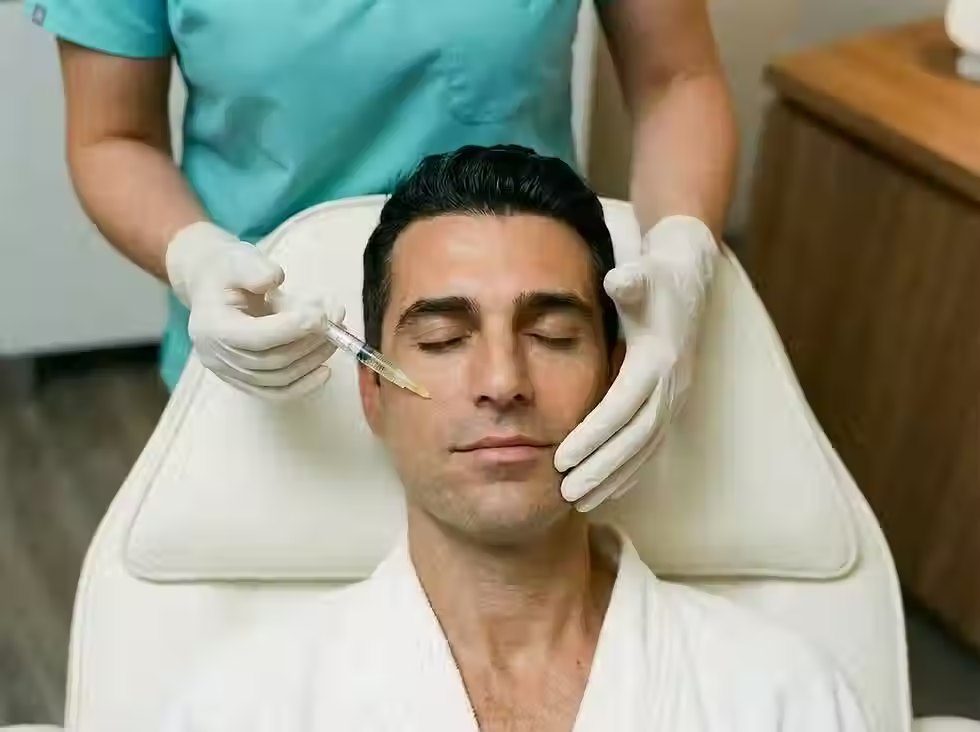
This skin repair treatment is relatively straightforward. A topical anaesthetic cream is applied beforehand to minimise discomfort, and the polynucleotide solution is then injected into the target area using a fine needle or cannula. Sessions typically last between 30 and 60 minutes. There may be mild redness, swelling, or small bumps at the injection sites, all of which usually resolve within 24 to 48 hours. Downtime is minimal for most patients. A full course generally consists of two to four sessions, depending on the area being treated and the degree of skin concern. We will recommend the best course of action based on your specific needs.




FAQ'S
The mechanism behind polynucleotides is rooted in regenerative medicine. When injected into the skin, PN molecules bind to fibroblast growth factor receptors, activating fibroblasts that produce collagen and elastin. This stimulation kick-starts healing that continues long after the treatment itself. At the same time, polynucleotide treatment has a hydrating effect that leads to gradual improvements in:
• Skin texture and tone
• Skin elasticity
• Fine lines
• Sensitive skinThe mechanism behind polynucleotides is rooted in regenerative medicine. When injected into the skin, PN molecules bind to fibroblast growth factor receptors, activating fibroblasts that produce collagen and elastin. This stimulation kick-starts healing that continues long after the treatment itself. At the same time, polynucleotide treatment has a hydrating effect that leads to gradual improvements in:
• Skin texture and tone
• Skin elasticity
• Fine lines
• Sensitive skinThe mechanism behind polynucleotides is rooted in regenerative medicine. When injected into the skin, PN molecules bind to fibroblast growth factor receptors, activating fibroblasts that produce collagen and elastin. This stimulation kick-starts healing that continues long after the treatment itself. At the same time, polynucleotide treatment has a hydrating effect that leads to gradual improvements in:
• Skin texture and tone
• Skin elasticity
• Fine lines
• Sensitive skinThe mechanism behind polynucleotides is rooted in regenerative medicine. When injected into the skin, PN molecules bind to fibroblast growth factor receptors, activating fibroblasts that produce collagen and elastin. This stimulation kick-starts healing that continues long after the treatment itself. At the same time, polynucleotide treatment has a hydrating effect that leads to gradual improvements in:
• Skin texture and tone
• Skin elasticity
• Fine lines
• Sensitive skinThe mechanism behind polynucleotides is rooted in regenerative medicine. When injected into the skin, PN molecules bind to fibroblast growth factor receptors, activating fibroblasts that produce collagen and elastin. This stimulation kick-starts healing that continues long after the treatment itself. At the same time, polynucleotide treatment has a hydrating effect that leads to gradual improvements in:
• Skin texture and tone
• Skin elasticity
• Fine lines
• Sensitive skinThe mechanism behind polynucleotides is rooted in regenerative medicine. When injected into the skin, PN molecules bind to fibroblast growth factor receptors, activating fibroblasts that produce collagen and elastin. This stimulation kick-starts healing that continues long after the treatment itself. At the same time, polynucleotide treatment has a hydrating effect that leads to gradual improvements in:
• Skin texture and tone
• Skin elasticity
• Fine lines
• Sensitive skin